How to prepare a first meeting with a local business: what to research, what to bring and what to ask
A practical guide to the first visit or meeting with a small business: what to check beforehand, what to bring ready-made, which questions to ask, how to talk about money and how to leave with an agreed next step.
Esta guía también está en español: Leer en español
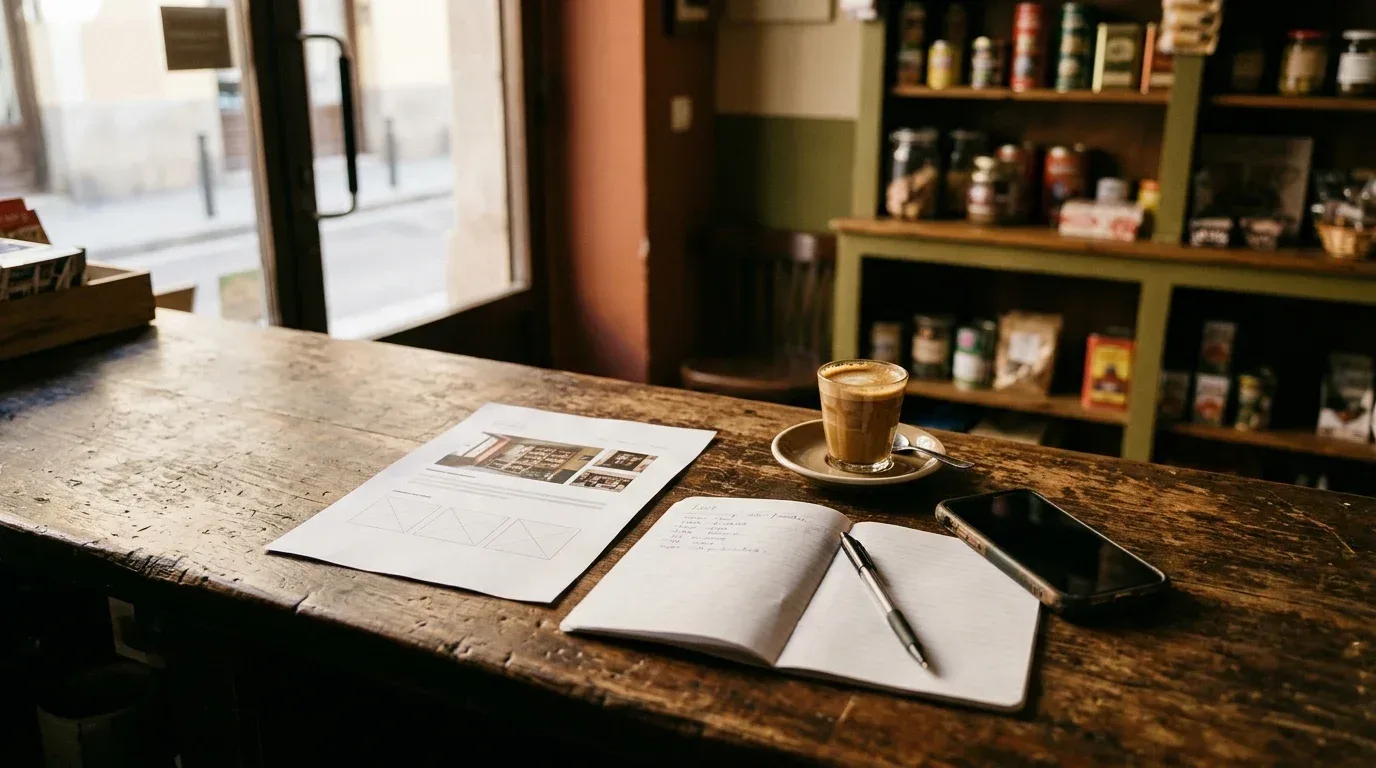
Getting ten minutes with the owner of a business takes a lot of work. You've called or dropped by, found the right moment, and they've said "fine, come on Thursday at eleven". And that is exactly where many sales are lost without anyone noticing: you arrive, you show what you do, the owner nods, says they'll think about it, and you leave feeling it went well. Two weeks later they don't answer the phone.
It almost never fails because of the price or the product. It fails because the meeting was used to talk instead of to listen, because nothing was brought that had been made for that particular business, or because it ended without agreeing what happens next. All three can be fixed with preparation, and preparation doesn't take hours: with fifteen or twenty well-spent minutes you arrive knowing more about the business than most of the salespeople who walk through its door.
This guide is for anyone who sells websites, marketing, online booking, management software or any other service to small businesses in Spain. It explains what to check beforehand, what to bring and what not to, what time to go, which questions get the owner talking, how to bring up money, how to close with a next step and what to do as soon as you walk out of the door.
Short answer: before the meeting, check their website, their Google Business Profile, their reviews and how their customers book or buy, and pick one concrete problem you can demonstrate. Bring something made for that business (a mockup, a side-by-side screenshot, a calculation) instead of a generic brochure. In the meeting, talk little at the start and ask how things work today, what eats up their time and what they have already tried. Ask early who decides and what budget they have in mind. Don't leave without a next step with a date and without knowing how they would prefer to receive your proposal.
What the first meeting is really for
Before preparing anything, it helps to be clear about what you want to achieve, because it changes everything else. In a first meeting with a small business, things are almost never signed. Usually the owner needs to think it over, check with their business partner or look at the numbers. If you walk in planning to close on the spot, you'll push where you shouldn't and you'll talk too much.
The realistic goal has three parts:
- Understand how the business works and what is costing it money, time or customers today. Not what you think it is missing, but what actually worries the owner.
- Check whether what you sell fits. Sometimes the answer is no, and finding that out in the first meeting is good news: you don't waste weeks chasing something that was never going to happen.
- Leave with a concrete next step: a proposal they have asked for, a second visit with their partner, a trial, a date. Something you both know is going to happen.
If you leave with those three things, the meeting went well even if you sold nothing. If you leave with a "very interesting, I'll let you know", it didn't go well, however charming the owner was.
Fifteen minutes of preparation that show
Preparation doesn't mean doing a full audit of the business. It means arriving with three or four facts that prove you have looked at their business and not at a template. This is what is worth checking, in this order:
| What you check | Where | What it tells you |
|---|---|---|
| Whether they have their own website and what state it is in | Searching their name and opening the site on your phone | Whether it works on mobile, has HTTPS, allows booking or buying, and is up to date |
| Their Google Business Profile | Google Maps | Opening hours, photos, category, and whether the linked website is theirs or a directory |
| The reviews, actually read, not just the rating | The Google profile and, for restaurants and bars, other platforms | What customers complain about and what they praise: often gold for the meeting |
| How customers book or buy | The website, the profile and social media | Whether they use the phone, WhatsApp, a commission-based platform or nothing |
| Their social media | Instagram or Facebook | Whether they post, how often, and whether anyone answers comments |
| Two nearby competitors | Google Maps, same category, same neighbourhood | What those have that this business doesn't, and the other way round |
| Who the owner is or who decides | The website ("about us"), the legal notice, your earlier conversation | Who you'll be talking to and whether a second meeting will be needed |
That is usually enough. What you're looking for at the end of those fifteen minutes is one concrete, verifiable problem you can put on the table. Not "your online presence could be improved", which means nothing, but something like:
- "Your website doesn't let people book, and in the reviews two customers say they couldn't get through on the phone."
- "On a phone, the menu covers your number and it can't be tapped."
- "Your Google profile links to a directory page, not to your website."
- "The hair salon on the corner shows up above you on Maps and has photos of its work; you have three photos of the shopfront."
An observation like that does two things at once: it shows you've taken the trouble, and it gives the owner something real to react to. If you sell new websites, our guide on how to tell if a business needs a new website lists the signs that matter most. If you sell something else, what to offer each type of local business explains what each sector usually lacks.
One warning: don't arrive knowing too much about personal matters. If you mention in the meeting that you saw on Instagram the owner was on holiday in Asturias, you won't look prepared, you'll look odd. What you care about is the business, not the person.
What to bring and what to leave at home
What you bring to the meeting says more about you than what you say. One rule works almost every time: one thing made for that business is worth more than ten generic ones.
Some ideas depending on what you sell:
- If you sell websites: a mockup of the homepage with their name, their photos (the ones on their Google profile are fine for an internal draft) and their opening hours. It doesn't have to be perfect, it has to be theirs. We go into more detail in how much to charge for a small business website (in Spanish), because that mockup also helps justify the price.
- If you sell online booking or appointment software: a simple calculation of what they pay today in commission to a platform, or of the time they spend on the phone giving out appointments.
- If you sell marketing or local SEO: a screenshot of how they appear today on Google Maps when you search their sector in their neighbourhood, next to the two competitors you looked at.
- If you sell social media management: three sample posts made with their own photos, not stock images.
Also bring, in case they ask, two or three references from similar businesses you've worked with, and a clear idea of your prices, even if you don't show them unless the subject comes up.
What is best left at home:
- The twenty-page brochure. Nobody will read it in front of you, or afterwards.
- The slide deck on your laptop. On a shop counter or a bar it's awkward and puts distance between you. A phone, a tablet or a couple of printed sheets work better.
- The contract. If things go well, you send it afterwards. Carrying it in your folder at a first meeting signals hurry.

AI-generated image. A mockup with the business's own photos and name opens more conversation than any generic presentation.
Where and when: each business's quiet hour
Ideally, meet at their premises. The owner is comfortable, doesn't waste time travelling, and you see things no website shows: the appointment book next to the phone, the queue that forms at two o'clock, the old card terminal, the blackboard with the menu written by hand.
The problem with their premises is that the business keeps running while you talk. That is why the time matters as much as the preparation. There are no exact rules, but this tends to work:
| Type of business | Best time | Time to avoid |
|---|---|---|
| Bars and restaurants | Mid-morning (10:30–12:00) or mid-afternoon (16:30–18:30) | Lunchtime and the start of dinner service |
| Hair and beauty salons | The day and time with fewest bookings, which they'll tell you | Fridays and Saturdays |
| Clinics | Before the first appointment or in the midday gap | During appointment hours |
| Shops | Just after opening or mid-afternoon on weekdays | Saturdays and the first weeks of the sales |
| Workshops and trades | First thing or at the end of the working day | When there's a car on the lift or a job under way |
Ask for twenty or thirty minutes, not an hour. It's easier to get a yes, and if things go well the owner will be the one who stretches it. Confirm the appointment the day before with a short call or through the channel they gave you: it's a courtesy and it saves you being stood up.
The first five minutes
The opening sets the tone for the rest. A few things help a lot:
Be on time and adapt to what you see. If you walk in and three customers are waiting, offer to wait or come back in half an hour. That one sentence earns you more credit than any argument.
Remind them why you're there, in one sentence. "As I mentioned on the phone, I've been looking at how customers find you online and I noticed a couple of things I think you'll find interesting." No company history, no years of experience.
Put your concrete observation on the table, but as a question. "I saw that you can't book on the website and that there are reviews from people who say they couldn't get through by phone. Does that happen a lot?" That way you're not telling them they're doing it wrong, you're asking about their experience. From there, let them talk.
Say how long you'll take. "I'll only take twenty minutes of your time." Then keep to it, or ask whether you can run over. A small business owner is watching the clock the whole time; knowing when you'll finish lets them listen.
The questions that get the owner talking
If you talk for fifteen minutes of a twenty-minute meeting, you've wasted an opportunity. What the owner tells you is what you'll later use in your proposal, and nobody buys a solution to a problem they haven't said out loud.
The questions that work best are open, concrete and about their day-to-day. Grouped by what you want to find out:
How things work today
- "How do new customers find you? How much comes from Google, from word of mouth, from people walking past?"
- "How do you handle appointments (or orders, or quotes) today? Who looks after it?"
- "What happens when someone calls and you're busy?"
What costs them time or money
- "What takes up most of your time in a normal week that isn't serving customers?"
- "Are there customers who slip away? When do you notice?"
- "If you could get one task off your plate, which would it be?"
What they have already tried
- "Have you had a website before or worked with someone on this? How did it go?"
- "What wouldn't you do again?"
That last one is among the most useful questions you can ask. Many small businesses have had a bad experience: a nephew who built the website and disappeared, an agency that charged every month for doing nothing, a platform that took a percentage. If you know that, you also know which fear you need to clear.
How they decide and with what money
- "If this were a good fit, would you decide it yourself or talk it over with someone?"
- "Do you have a budget in mind for this, even a rough one?"
- "Is there a time of year that suits you better or worse to get it going?"
You don't need to ask them all. Pick four or five based on what you already know and let the conversation flow. And when the owner answers, hold the silence for two seconds before you speak: often the most interesting part comes after the first answer.
There are also questions best not asked:
- Ones their website already answers. "So what do you do?" tells them you haven't looked at anything.
- Leading ones. "Don't you think you need a better website?" Nobody wants to answer that.
- Technical ones they won't understand. "Is your structured data set up properly?" If the question needs an explanation, it isn't for this meeting.
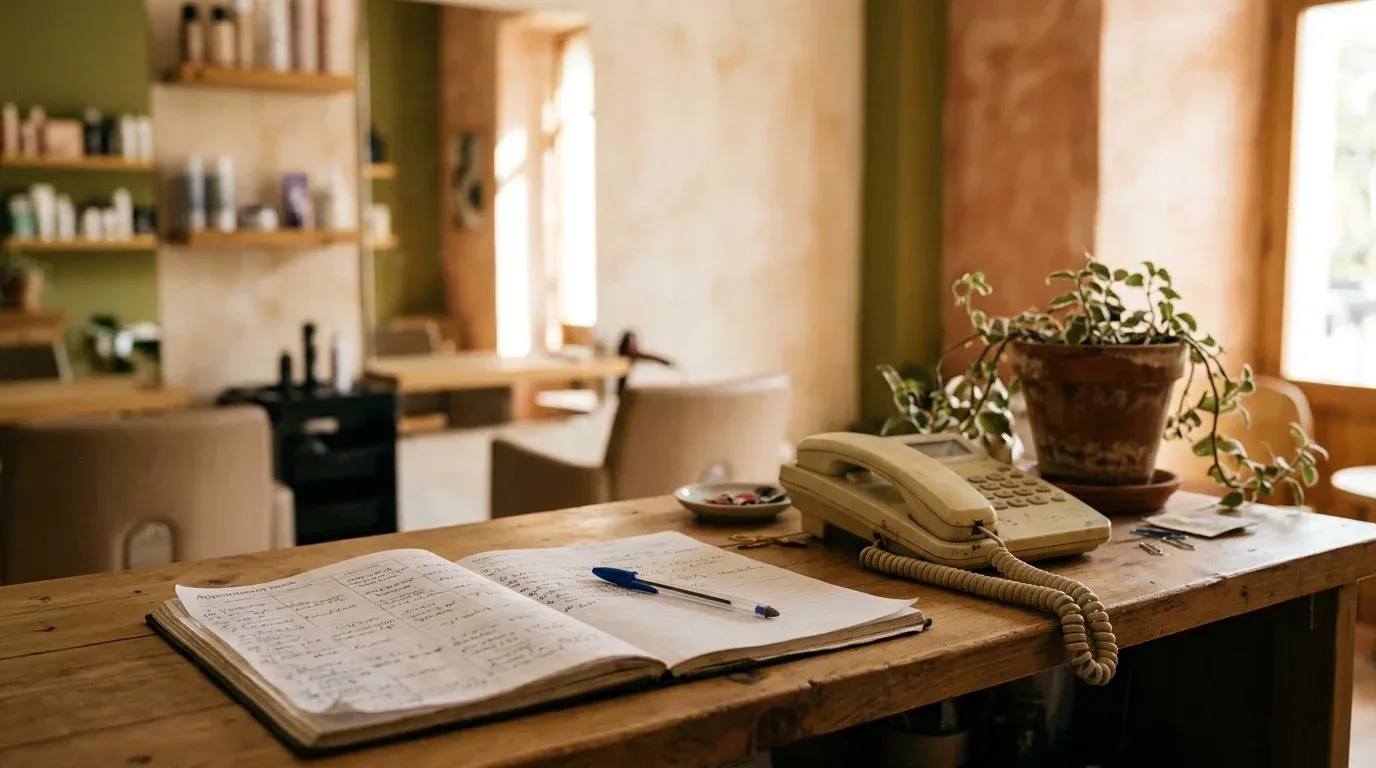
AI-generated image. What you see on the premises, like a paper diary next to the phone, counts as much as what you are told.
How to show what you've brought
What you've prepared isn't shown at the start. You show it once the owner has described their problem in their own words, because then what you put in front of them is the answer to what they've just said, not a catalogue.
An order that works:
- Repeat their problem in their words. "You're telling me that on Saturdays you lose bookings because you can't keep up with the phone."
- Show what you've prepared and connect it to that. "Look, this is how your website would look with a booking button: people pick a time without calling."
- Let them handle it. Let them swipe through the screens, see it on their own phone. What people touch, they imagine as theirs.
- Stop talking and wait for their reaction. If they ask "and how much is this?", that's a good sign. If they ask "and could I change this myself?", even better: they're already picturing themselves using it.
If during the conversation you discover that what you brought has nothing to do with their real problem, that's fine. Say so: "What I brought goes in a different direction, but from what you're telling me, I think this other thing would make more sense." It's far more credible than forcing the mockup.
When money comes up
Many salespeople avoid talking about money in the first meeting and leave it for the proposal. That's a mistake: if the owner has €300 in mind and you're going to propose €2,000, it's better to know today than after spending an afternoon on a proposal that will end up in a drawer.
You don't need to give a fixed price, but you do need an order of magnitude:
- If the owner asks, answer with a range: "A website like this is usually between €900 and €1,500, depending on what it includes. From what you've told me, I think we'd be at the lower end."
- If they don't ask, bring it up yourself near the end: "So I don't send you something outside what you had in mind, what figure would seem reasonable to you for something like this?"
- If the answer is far from what you can do, say so clearly and, if there is one, suggest a smaller version. If that doesn't fit either, better to leave it there than to pretend.
Talking about money early doesn't make you look pushy. It makes you look like someone who doesn't want to waste their time. If you need a price reference, how much to charge for a small business website (in Spanish) has indicative ranges and how to present them as three options.
How to end the meeting with a next step
The last two minutes are the most neglected and the most important. The meeting has to end with something agreed. The usual options, from most to least committed:
- "I'll prepare the proposal and show it to you here on Tuesday." The best: it has a date and you deliver it in person.
- "I'll email you the proposal on Thursday and call you on Monday to go through it." Fine, if they've told you they want it by email.
- "Let's meet another day with your partner so they can see it too." If they don't decide alone, it's the most useful step you can get.
- "Let's leave it until after the summer; I'll call you the first week of September." It isn't a yes, but it's a step with a date.
To get there, the simplest thing is to ask directly: "How shall we do it? Shall I prepare a proposal with two options and show it to you next week?" And before you leave, ask how they'd like to receive it: "Shall I send it by email or WhatsApp?" That answer also matters for a legal reason: if they ask you to send it, that message is something they've requested, and sending it is fine. Writing to them without being asked would not be. The details are in our guide on whether it's legal to cold-contact businesses in Spain.
If the meeting ends in a "not now", don't write it off: ask when it makes sense to talk again and through which channel. In how to follow up with a business that told you "not now" we explain what to do from there.
And if you sense a clear no, thank them and leave on a good note. The owner of a neighbourhood business talks to other owners of neighbourhood businesses. Being remembered as the one who didn't push also sells.
What you do as soon as you walk out
What happens in the half hour after the meeting decides a lot of sales. Three things:
Write everything down before you start the car. What they told you in their own words, the main problem, who decides, the budget they mentioned, the next step with its date and the channel through which they want to receive things. In an hour you won't remember half of it. Note only what concerns the business and the sale; there's no need to keep personal data you won't use.
Send a short summary if they told you to. Three or four lines: thanks for their time, what you understood about their situation, what you will do and when. It avoids misunderstandings and shows you listened. For example:
Hi Carmen. Thanks for seeing me this morning. My takeaway is that what worries you most is that in spring you can't keep up with phone orders and you'd like people to be able to order bouquets from the website. I'll prepare two options with fixed prices and show them to you on Tuesday at eleven in the shop, as we agreed. Best, Pablo.
Meet the deadline you gave. If you said Tuesday, it's Tuesday. Being late with the first thing you promise is the worst introduction there is.
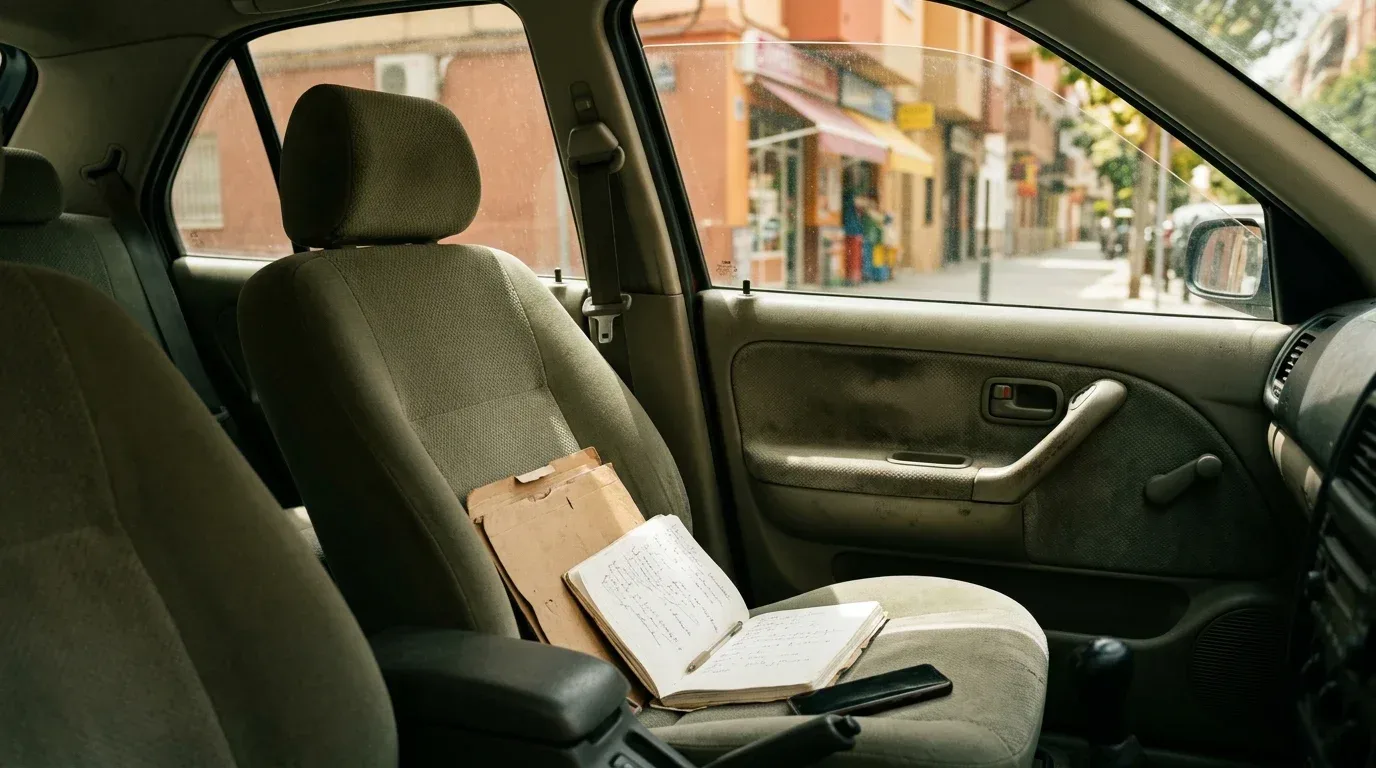
AI-generated image. Whatever you don't write down in the five minutes after the meeting will probably be lost.
Situations you'll come across
No meeting goes the way you pictured it. These are the ones that come up most and a reasonable way to handle them:
A customer comes in mid-conversation. Stop, step aside and wait. Don't keep talking to the owner while they're taking payment. When they come back, sum up in one sentence where you were. If it happens three or four times in a row, suggest coming back at another time: that isn't failure, it's respect.
The partner or spouse you weren't expecting turns up. Welcome them. Introduce yourself, sum up in two sentences what you've been talking about and ask them one of your questions. They are often the decision-maker and you've just saved yourself a second meeting.
"My nephew already does that for me." Don't argue and don't criticise the nephew. Ask how it's going: "And how is it? Does he update it when you need him to?" If it's going well, fine, and you leave without pushing. If it isn't going so well, the owner will tell you.
"How much does it cost?" in minute two. Give the range and add that it depends on what they need, which is why you'd like to ask a couple of questions. Dodging the question breeds distrust; answering quickly and getting back to your plan doesn't.
"Fine, let's go ahead" in the same meeting. It happens, especially with owners who already had the problem clearly in mind. Don't keep selling: confirm what's included, the price and the timeline, and tell them you'll send the proposal in writing that same afternoon so everything is clear. Whatever is agreed verbally is best put in writing.
You realise it isn't a fit. Tell them. "Honestly, from what you're telling me, I don't think it's worth it for you right now." You'll lose that sale, which was never going to happen, and you'll gain someone who might recommend you.
How Coworky helps you prepare the meeting
Fifteen minutes of preparation per business is fine when you have one meeting a week. When you want to work through a whole area or sector, it turns into hours. That is what Coworky (in Spanish) is for.
You search by sector and municipality or postcode, and Coworky returns up to twenty businesses. For each one you can request an analysis that checks whether it has its own official website or only appears in directories, whether the site works on mobile, whether it uses HTTPS, whether it has online booking or a shop, which social networks it links to and which contact details it publishes on its own site. With all that it gives the business a high, medium or low opportunity score. That is exactly the part of preparation that takes longest by hand.
If you've told Coworky in a sentence or two what you sell, you can also request an AI report for that business. The report includes:
- A summary of the situation, using only the facts verified in the analysis.
- The fit with what you sell (high, medium or low) and the reason, citing the evidence. If it doesn't fit, it says so.
- Concrete opportunities, each based on something that has been checked.
- Key questions for the meeting: what the analysis can't know (how they handle appointments today, who looks after the website) appears as a question, not as a claim.
- A short script for the first call or visit.
- Likely objections and a way to answer them.
The report is built not to make things up: it only receives verified facts and is forbidden from claiming anything else. It doesn't replace reading the reviews or looking at competitors, which are still your job, but it gives you the groundwork and lets you decide before you go whether the visit is worth it.
What Coworky doesn't do: it doesn't book meetings, it doesn't send emails or messages to businesses, and it isn't a CRM. You can save each business in your portfolio and mark where it stands (new, contacted, interested, client or discarded), but meeting notes and follow-up dates have to live in your own spreadsheet or diary.
You can try it with 3 searches and 10 analyses free, no card required, and plans start at €19 a month plus VAT. You'll find them in the pricing section (in Spanish). If you'd rather start with something that needs no sign-up, the free website analyser (in Spanish) checks a single website and the cold call script generator (in Spanish) helps with the call that gets you the meeting.
The mistakes that come up most often
- Talking more than the owner. If you leave knowing little more than when you arrived, you talked too much.
- Bringing the same thing to everyone. A generic brochure tells the owner they're just another name on your list.
- Opening with criticism. "Your website is awful" puts anyone on the defensive, especially if a relative built it. Ask instead of judging.
- Not asking who decides. And finding out three weeks later that the one who signs is the partner who has never met you.
- Dodging money. Preparing a €2,000 proposal for someone who was thinking of €300.
- Leaving without a next step. "We'll talk" isn't a step; "Tuesday at eleven" is.
- Sending the proposal a week late. Interest cools quickly and someone else may get there first.
- Writing afterwards without permission. If they didn't tell you to write, call or drop by again; don't add them to a mailing list.
Checklist for the morning of the meeting
Before you leave home, go over this:
- [ ] I confirmed the time the day before.
- [ ] I looked at their website on my phone, their Google profile and their reviews.
- [ ] I compared them with two nearby competitors.
- [ ] I have one concrete, verifiable problem to open the conversation.
- [ ] I'm bringing one thing made for this business (mockup, screenshot or calculation).
- [ ] I have four or five questions chosen, including who decides.
- [ ] I know what price range I'll give if they ask.
- [ ] I know which next step I want to propose.
- [ ] I have somewhere to take notes when I leave.
Frequently asked questions
How long should a first meeting with a small business last?
Between twenty and thirty minutes. Ask for little time and stick to it: you're more likely to get it, the owner listens better when they know when you'll finish, and if the conversation goes well they'll be the one to extend it.
Is it better to meet at the business's premises or somewhere else?
At their premises, almost always. The owner is comfortable and you see how the business really works. The downside is interruptions, which you can reduce by choosing each sector's quiet hour: mid-morning for bars and restaurants, first thing for shops and workshops, gaps without bookings for salons and clinics.
What questions should I ask a potential client in a meeting?
Open questions about their day-to-day: how new customers find them, how they handle appointments or orders today, what takes up most of their time, what they've tried before and wouldn't repeat, who decides and what budget they have in mind. Pick four or five based on what you already know and listen more than you talk.
Should I talk about price in the first meeting?
Yes, at least as an order of magnitude. If the owner asks, give a realistic range. If they don't, raise it yourself near the end so you don't prepare a proposal far from what they have in mind. Talking about money early saves both of you time.
What should I bring to a meeting to sell a website to a business?
A mockup of the homepage with their name, their photos and their opening hours, even a simple one, plus two or three references from similar businesses. It works much better than a generic brochure or a slide deck. The contract is better sent later.
Can I email the business after the meeting?
If they've asked you to send the proposal or a summary by email, yes: it's a communication they requested. If they haven't, Spain's LSSI doesn't allow you to send them commercial emails without consent, even if they're a company. That's why it's worth asking before you leave how they'd like to receive things. This is a practical summary, not legal advice.
What do I do if the owner says they need to think about it?
Ask what they need in order to decide and agree a date: "Shall I call you on Thursday and you can tell me what you think?" If there's a specific doubt (the price, the timeline, their partner), it's better to know it now. And if it ends up as a "not now", work the follow-up with a date and something new to bring each time.
How can I prepare many meetings without spending hours on research?
With a tool that does the mechanical part. Coworky finds businesses by sector and municipality, checks their official website, whether it works on mobile, whether it has HTTPS, online booking or a shop, and generates an AI report with the fit, key questions, a script and likely objections, using only verified facts. You spend your time on what the tool can't do: reading the reviews and deciding what you'll bring.